
For many women, the transition into perimenopause and menopause brings a variety of physical and emotional changes. Among the most common and often frustrating symptoms are hot flashes. A sudden wave of heat, unexpected sweating, facial flushing, and discomfort can occur at any time during a meeting, while relaxing at home, or even in the middle of the night.
Although hot flashes are a normal part of the menopausal journey, understanding why they happen can make them feel less overwhelming. The more women learn about the underlying causes, the better equipped they are to make lifestyle choices that support comfort, confidence, and overall well-being during this stage of life.
What Exactly Is a Hot Flash?
A hot flash is a sudden sensation of warmth that spreads throughout the upper body, particularly the face, neck, and chest. It often appears unexpectedly and may be accompanied by sweating, redness of the skin, and an increased heart rate.
For some women, a hot flash may last only a few seconds. For others, it can continue for several minutes and occur multiple times throughout the day. When these episodes happen during sleep, they are commonly referred to as night sweats and may interfere with restful sleep.
While every woman’s experience is different, hot flashes are one of the most frequently reported symptoms during perimenopause and menopause.
The Hormonal Connection Behind Hot Flashes
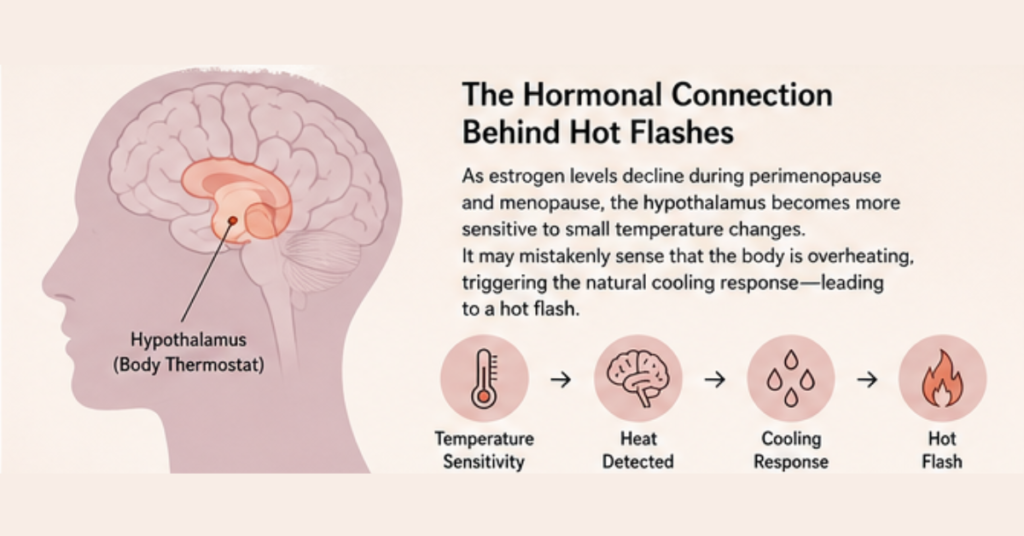
The primary reason hot flashes occur is linked to changing hormone levels, particularly estrogen.
Throughout a woman’s reproductive years, estrogen plays a role in many bodily functions, including helping regulate the body’s temperature control system. As women approach menopause, estrogen levels begin to fluctuate and gradually decline.
These hormonal changes can affect a region of the brain called the hypothalamus, often referred to as the body’s thermostat. When the hypothalamus becomes more sensitive to slight temperature changes, it may mistakenly interpret normal body temperature as being too warm.
As a result, the body activates its natural cooling mechanisms, including:
- Expanding blood vessels near the skin
- Increasing blood circulation
- Triggering sweating
- Releasing excess heat
This chain reaction creates the familiar sensation known as a hot flash.
Rather than being caused by actual overheating, hot flashes are often the result of the body’s temperature regulation system becoming more sensitive during menopause.
Common Hot Flash Symptoms
Hot flashes can vary significantly from person to person. Some women experience mild warmth, while others notice more intense symptoms that affect daily comfort.
| Common Symptom | Description |
|---|---|
| Sudden warmth | Usually begins in the chest, neck, or face |
| Flushed skin | Temporary redness, particularly on the face |
| Sweating | Can range from mild perspiration to significant sweating |
| Rapid heartbeat | Temporary increase in heart rate |
| Chills afterward | Feeling cold once the episode passes |
| Night sweats | Hot flashes that occur during sleep |
| Sleep disruption | Waking due to overheating or sweating |
The frequency and intensity of symptoms can change throughout the menopausal transition.
Factors That May Trigger Hot Flashes
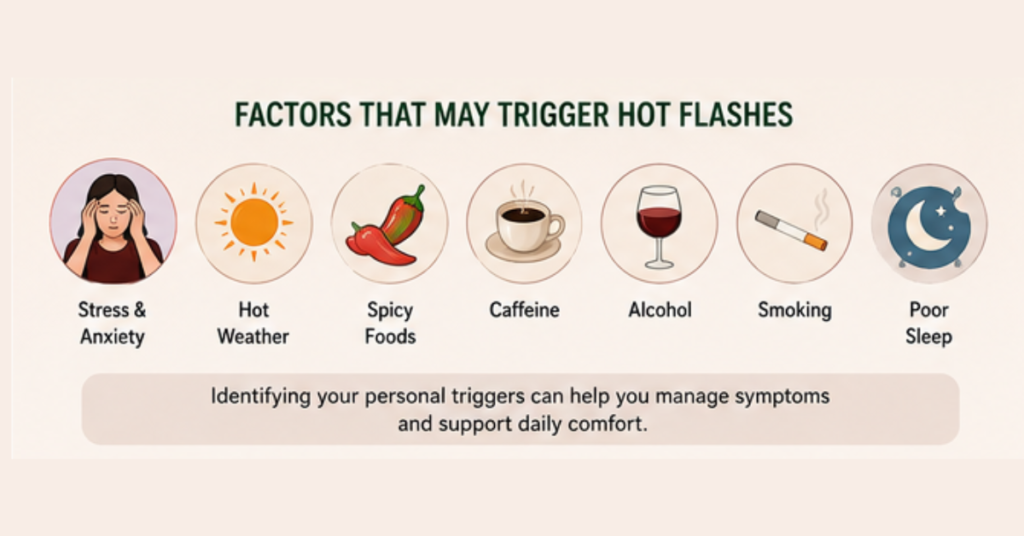
Although hormonal changes are the primary cause, certain environmental and lifestyle factors may increase the likelihood of experiencing hot flashes.
Many women find that specific triggers make symptoms more noticeable.
Stress and Emotional Tension
Periods of stress may make the nervous system more reactive. When stress levels rise, the body’s natural responses can become heightened, which may increase the intensity of hot flashes.
Warm Environments
Hot weather, heated rooms, and excessive layers of clothing may contribute to feelings of overheating and trigger episodes in some women.
Spicy Foods
Certain foods containing strong spices may temporarily raise body temperature and increase feelings of warmth.
Caffeine and Alcohol
Coffee, energy drinks, tea, and alcoholic beverages affect individuals differently. Some women notice that reducing these beverages helps support greater comfort throughout the day.
Smoking
Research has suggested that smoking may be associated with more frequent menopausal symptoms. Maintaining healthy lifestyle habits may support overall wellness during menopause.
Poor Sleep Habits
Lack of quality sleep can make many menopause symptoms feel more noticeable, including hot flashes, fatigue, and mood changes.
Identifying personal triggers can be a valuable step toward managing daily comfort.
Why Do Some Women Experience More Hot Flashes Than Others?
Every menopause journey is unique.
Some women may experience occasional hot flashes for a short period, while others continue to experience them for several years. Factors that may influence symptom frequency include:
- Genetics
- Lifestyle habits
- Overall health
- Stress levels
- Sleep quality
- Body composition
- Stage of menopause
Because menopause affects every woman differently, there is no single timeline that applies to everyone.
How Hot Flashes Can Affect Daily Life
Hot flashes are often discussed as a physical symptom, but they can influence many aspects of everyday life.
Women may find themselves adjusting clothing choices, changing sleep routines, or planning activities around symptom patterns. Frequent nighttime hot flashes can also contribute to interrupted sleep, which may affect energy levels and mood the following day.
Some women report feeling less confident in social situations due to unexpected episodes, particularly in professional or public settings.
Understanding that hot flashes are a normal biological response during menopause can help reduce anxiety and encourage a more positive perspective on this natural transition.
Lifestyle Habits That May Support Comfort During Menopause
While hot flashes cannot always be avoided, certain healthy habits may help women feel more comfortable throughout the menopausal transition.
These include:
- Maintaining a balanced diet rich in nutrients
- Staying physically active
- Practicing stress-management techniques
- Establishing a consistent sleep routine
- Staying hydrated throughout the day
- Wearing lightweight, breathable clothing
- Tracking personal symptom triggers
Many women also explore wellness-focused approaches that support hormonal balance and overall health during menopause.
Nutrients such as Vitamin D, Vitamin B6, Magnesium, and botanical ingredients including Red Clover, Lemon Balm, Dong Quai, Chasteberry, and Black Cohosh are commonly included in menopause-support formulations designed to help women maintain comfort and well-being during this stage of life.
Looking Beyond the Symptoms
Menopause is not simply an ending—it is a new phase of life. While hot flashes may be one of the most recognizable symptoms, they are also a reminder that the body is adapting to natural hormonal changes.
By understanding what causes hot flashes and taking proactive steps to support overall wellness, women can approach menopause with greater confidence, knowledge, and self-care.
Hot flashes may be common, but they do not define the menopause experience. With education, healthy habits, and the right support, many women find ways to navigate this transition while continuing to feel balanced, active, and empowered.