
Menopause is a natural transition that brings significant changes to a woman’s body. While much of the conversation around menopause focuses on hormonal fluctuations, there are also important nutritional factors that can influence how women feel during this stage of life. One nutrient that deserves special attention is magnesium.
Often called the “master mineral,” magnesium is involved in more than 300 biochemical processes throughout the body. From supporting muscle function and energy production to promoting relaxation and sleep quality, magnesium plays a role in many of the systems that women rely on every day.
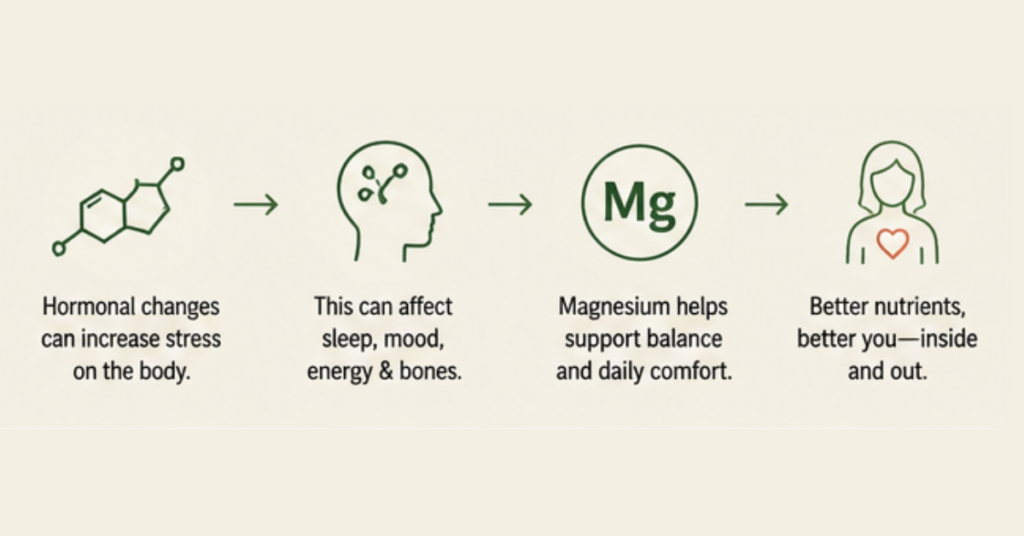
During perimenopause and menopause, women may experience changes in sleep patterns, mood, energy levels, and overall well-being. While magnesium is not a cure or treatment for menopause, maintaining healthy magnesium levels may help support several aspects of health that become increasingly important during this transition.
Understanding the role of magnesium can help women make more informed choices about nutrition and wellness as they navigate menopause with confidence.
Why Magnesium Is Essential for Women’s Health
Magnesium is a mineral naturally found in many foods and is required for hundreds of functions within the body. Despite its importance, many adults do not consistently consume enough magnesium through their daily diet.
The body uses magnesium to support:
- Normal muscle function
- Nervous system health
- Energy metabolism
- Bone health
- Protein synthesis
- Cardiovascular function
- Relaxation and recovery processes
Because magnesium participates in so many biological functions, even small changes in intake can influence how the body feels and performs.
For women entering menopause, ensuring adequate magnesium intake becomes an important part of maintaining overall wellness.
The Connection Between Magnesium and Sleep Quality
One of the most common concerns during menopause is disrupted sleep.
Many women find themselves waking during the night, struggling to fall asleep, or feeling less rested in the morning. These changes can affect mood, concentration, productivity, and energy levels throughout the day.
Magnesium is often associated with relaxation because it supports normal nervous system function and helps regulate processes involved in rest and recovery.
While sleep quality is influenced by many factors, including stress, environment, and hormonal changes, maintaining healthy magnesium levels may support a more balanced nighttime routine.
Women who prioritize sleep-supportive habits often combine:
- Consistent bedtimes
- Reduced evening screen time
- Stress management practices
- Balanced nutrition
- Adequate magnesium intake
Together, these habits can contribute to a healthier sleep environment.
Supporting Energy During Menopause
Feeling less energetic is another common experience during midlife.
Changes in sleep quality, daily stress, and hormonal shifts can all influence how energized a woman feels from day to day.
Magnesium plays an important role in converting food into usable energy. Every cell in the body depends on magnesium to help support normal energy production processes.
When the body has access to the nutrients it needs, it can perform many of its daily functions more efficiently.
This is one reason magnesium is frequently included in wellness-focused nutritional formulas designed for women during menopause and beyond.
Magnesium and Emotional Well-Being
Menopause can be an emotional transition as well as a physical one.
Many women report periods of increased stress, occasional irritability, or changes in mood during perimenopause and menopause. While emotional wellness is influenced by numerous factors, nutrition can be an important piece of the overall picture.
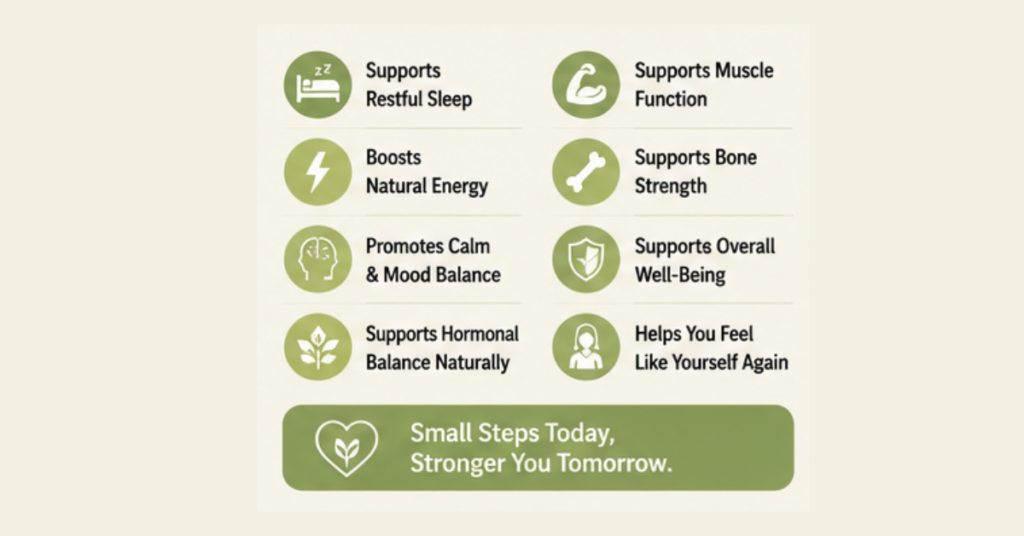
Magnesium supports normal nervous system function, making it an important nutrient for maintaining overall balance.
In addition to proper nutrition, practices such as exercise, mindfulness, social connection, and healthy sleep habits can all contribute to emotional well-being during menopause.
Rather than focusing on one solution, experts often recommend a comprehensive approach that addresses multiple areas of health simultaneously.
Magnesium’s Role in Bone Health
As women age, bone health becomes increasingly important.
Estrogen naturally supports bone maintenance throughout a woman’s reproductive years. As estrogen levels decline during menopause, many women become more focused on supporting long-term skeletal health.
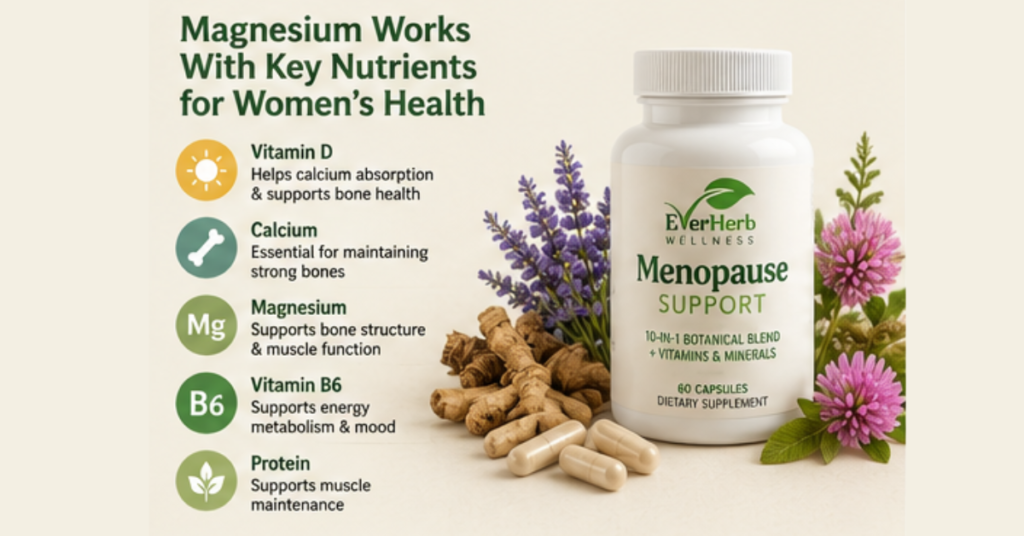
Magnesium works alongside other important nutrients such as calcium and vitamin D to support healthy bones.
A balanced wellness strategy often includes:
| Nutrient | Role in Healthy Aging |
|---|---|
| Magnesium | Supports bone structure and muscle function |
| Vitamin D | Supports calcium absorption and bone health |
| Calcium | Important for maintaining healthy bones |
| Protein | Supports muscle maintenance |
| Vitamin B6 | Supports energy metabolism |
Consuming a variety of nutrient-dense foods can help support these essential functions throughout menopause and beyond.
Natural Food Sources of Magnesium
One of the best ways to support healthy magnesium intake is through a balanced diet.
Many nutritious foods naturally contain magnesium and can easily be incorporated into everyday meals.
Some excellent dietary sources include:
- Spinach and leafy greens
- Almonds and cashews
- Pumpkin seeds
- Avocados
- Black beans
- Lentils
- Oats
- Whole grains
- Dark chocolate
- Soybeans
Building meals around whole, minimally processed foods can help women increase their intake of important vitamins and minerals while supporting overall wellness.

Why Magnesium Is Often Included in Menopause Support Formulas
Many modern menopause-support supplements include magnesium as part of a broader nutritional approach.
This is because menopause is rarely associated with a single concern. Women often seek support for multiple aspects of wellness, including sleep, energy, mood, and daily comfort.
When combined with other nutrients and botanicals such as Vitamin D3, Vitamin B6, Lemon Balm, Red Clover, Dong Quai, Chasteberry, and Black Cohosh, magnesium can contribute to a comprehensive wellness-focused formula designed for women navigating menopause.
The goal is not to replace healthy lifestyle habits but to complement them as part of a balanced routine.
Small Daily Choices Can Make a Big Difference
One of the most important things to remember about menopause is that wellness is built through consistent habits rather than quick fixes.
Regular movement, quality sleep, stress management, proper hydration, balanced nutrition, and nutrient support all work together to influence how women feel during this stage of life.
Magnesium may not receive the same attention as hormones or other menopause-related topics, but its involvement in so many essential bodily functions makes it a valuable nutrient to understand.
By focusing on overall wellness and ensuring the body receives key nutrients it needs, women can take proactive steps toward feeling balanced, energized, and supported throughout menopause.
Conclusion
Magnesium is an essential mineral that supports numerous functions related to health and well-being. During menopause, when sleep quality, energy levels, emotional balance, and bone health become increasingly important, maintaining healthy magnesium intake can be a valuable part of a comprehensive wellness strategy.
Whether through nutritious foods, healthy lifestyle habits, or thoughtfully formulated nutritional support, magnesium offers an opportunity for women to prioritize their well-being during one of life’s most significant transitions.
Menopause may bring change, but with knowledge, support, and a focus on overall wellness, women can continue to thrive and feel confident in every stage of life.